

The car rental agreement is not only a formality. It’s the safety net in law that protects your vehicles, your cash flow, and your corporate reputation. Fleet owners today, especially those shifting from marketplace hosting to direct reservations, need a clear, enforceable agreement. The correct contract details renter obligations, damage rules, insurance expectations, costs, and rental terms before keys are exchanged.
2026 is not the year for a basic online document. Operators require a more solid legal process that is backed by automation, identity checks, e-signatures, and organized data. This is where professional technologies like Car rental software and Car Rental Management Software come to the rescue to help fleet managers reduce risk, save time, and scale with confidence.
Why a Generic Car Rental Agreement Template Is Not Enough
Many new rental operators will just look for a free template online, change the business name, and start using it right away. It seems fast and simple, but it can leave big holes.
A generic document may not be in compliance with your state laws, your insurance setup, your fee structure, or your specific business model. It may also not contain essential safeguards regarding digital bookings, remote handovers, renter verification, and unauthorized use.
If your contract isn’t specific on who pays first in case of an accident, you can run into difficulties with insurance claims.
If it doesn’t say you can’t, a renter can take your vehicle for rideshare, towing, racing, or commercial deliveries. If it doesn’t cover late fines, cleaning costs, smoking fees, tolls, and traffic penalties, the renter can contest such charges down the line.
A professional automobile rental agreement must be specific, to the point, and reflect the way your fleet actually functions. It should not be a duplicate document. It should be part of your business process.
5 Essential Clauses for Car Rental Contracts in 2026
A strong agreement should protect both sides, but it must be especially clear about renter responsibility. These are the essential clauses for car rental contracts 2026 operators should include.
1. Indemnification Clause
This is commonly known as a “hold harmless” clause. It states that the renter is responsible for damage, losses, claims, legal issues, or third party problems that happen while the vehicle is in their possession.
For fleet owners, this clause is critical. It helps establish that once the renter accepts the vehicle, they also accept responsibility for using it safely and legally.
2. Prohibited Use Policy
Your agreement should clearly explain what renters are not allowed to do with the vehicle. This may include off roading, racing, towing, subleasing, smoking, using the car for Uber or Lyft, transporting illegal goods, or allowing an unauthorized driver to operate the vehicle.
A prohibited use section reduces confusion and gives you a stronger position if the renter violates the terms.
3. Insurance Primacy Clause
Insurance is one of the most important parts of any private auto rental contract. Your agreement should clearly state which insurance policy responds first if an accident happens.
If the renter’s personal insurance is expected to be primary, say that clearly. If your business uses a supplemental rental protection product, explain how that coverage fits into the process. This helps reduce disputes and delays when a claim is filed.
4. Maintenance and Damage Responsibility
The renter should understand that they are responsible for damage caused by misuse or negligence. For example, if they continue driving with a flat tire, ignore dashboard warnings, use the wrong fuel, or return the vehicle with new body damage, the contract should explain how those issues are handled.
This clause protects your fleet from careless behavior and supports better long term car rental ROI.
5. Fees and Penalties Disclosure
Clear pricing prevents confusion. Your agreement should list all possible charges before the rental begins. This may include late return fees, refueling charges, tolls, tickets, smoking fees, pet cleaning fees, excessive dirt or odor removal, lost keys, mileage overages, and damage related costs.
When fees are written clearly and accepted through an e sign process, it becomes easier to defend charges if a renter disputes them.
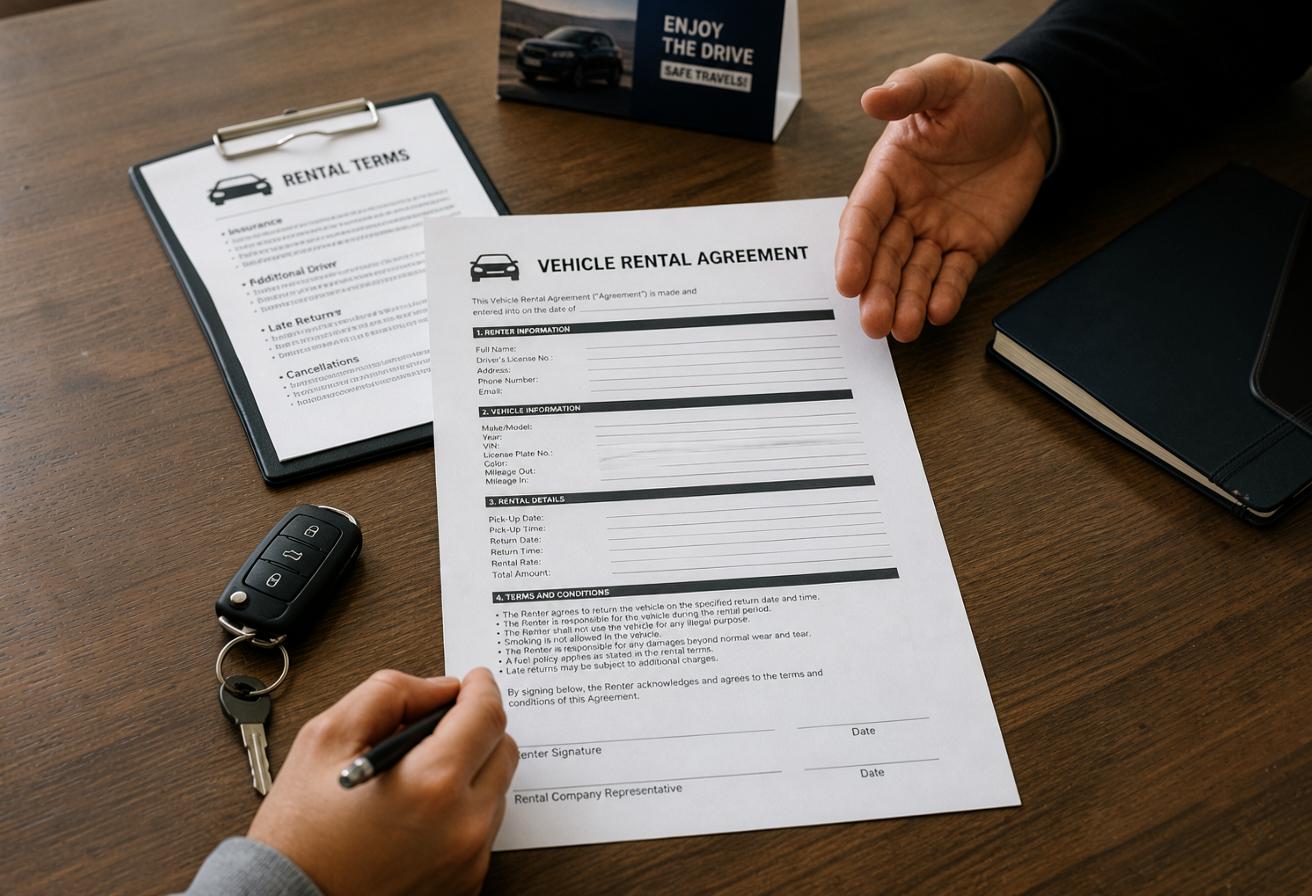
The Digital Handover: Why Paper Contracts Are Becoming a Risk
Paper contracts delay the rental procedure. They can be lost, destroyed, misinterpreted, or filled out incorrectly. Paper adds additional burden to a direct booking strategy where speed and customer experience are key.
This difficulty is solved by digital agreements.
Renters can examine and sign the contract on their phone using automated e-sign agreements, before pickup or during check-in. All signed documents can be kept in the cloud, time-stamped, and associated with the renter’s booking record. This provides a good digital trail that is far easier to handle than folders of scanned paper.
That is where Car Rental Management Software comes in. Rather than manually distributing paperwork, tracking signatures, saving PDFs, and matching contracts to bookings, operators may automate the process from one platform.
FleetHQ allows rental operators to create a more professional handover by tying rental agreements, client information, booking details, and digital signatures all together in the same workflow.
How Car Rental Software Helps Protect Your Fleet
The ideal Car Rental Software is more than booking management. It helps establish a safer, more reliable rental business.
FleetHQ, for example, helps operators handle digital contracts, record renter information, link agreements to reservations, and eliminate manual admin workload. When your process is automated, you’re less likely to forget to conduct key things like collecting signatures, confirming terms, or documenting renter acceptance.
It also enhances the experience for renters. Customers do not desire a slow, confusing check-in. They expect clarity, speed, and professionalism. A digital agreement provides them with better protection while offering your organization.
If you’re a fleet owner looking to grow, this is important. Good systems make fewer errors. Fewer errors means fewer conflicts. Fewer disagreements means protecting revenue and better car rental ROI over time.
Legal Requirements for Private Rental Operators
Your rental agreement should include your business name, contact information, rental dates, vehicle specifics, renter details, payment terms, insurance expectations, and accident reporting method.
If you’re running an LLC, your agreement should also reflect that corporate identification. It should also provide information on how tenants can report damage, accidents, mechanical problems, or emergencies throughout the rental period.
The laws may differ by jurisdiction, so you should always have your agreement examined by a competent legal professional. A good, robust template is a good place to start, but a legal review helps ensure that the contract works for your state, your insurance policy, and how you do business.
Conclusion
Your rental agreement is more than a contract. This is the basis of your fleet protection strategy.
A flimsy agreement is an open invitation to confusion, conflicts, unpaid payments, and legal risk. A good agreement clearly defines responsibilities, protects your assets, improves the customer experience, and supports long term business success.
Successful rental companies aren’t going to be using paper forms or random templates pulled from the internet by 2026. Automated agreements, digital records, renter verification, smarter systems – they’ll utilize it all to secure every rental from day one.
FleetHQ offers fleet owners the ability to ditch the manual paperwork and create a more secure and scalable leasing business.
The strength of your car rental empire is only as strong as your legal foundation. Don’t leave your assets to chance with a “sample” you found on Google. Use the systems built for the modern operator.
Stop Managing Paperwork. Start Scaling with FleetHQ’s Automated Rental Agreements.